Bringing Home a New Kitty
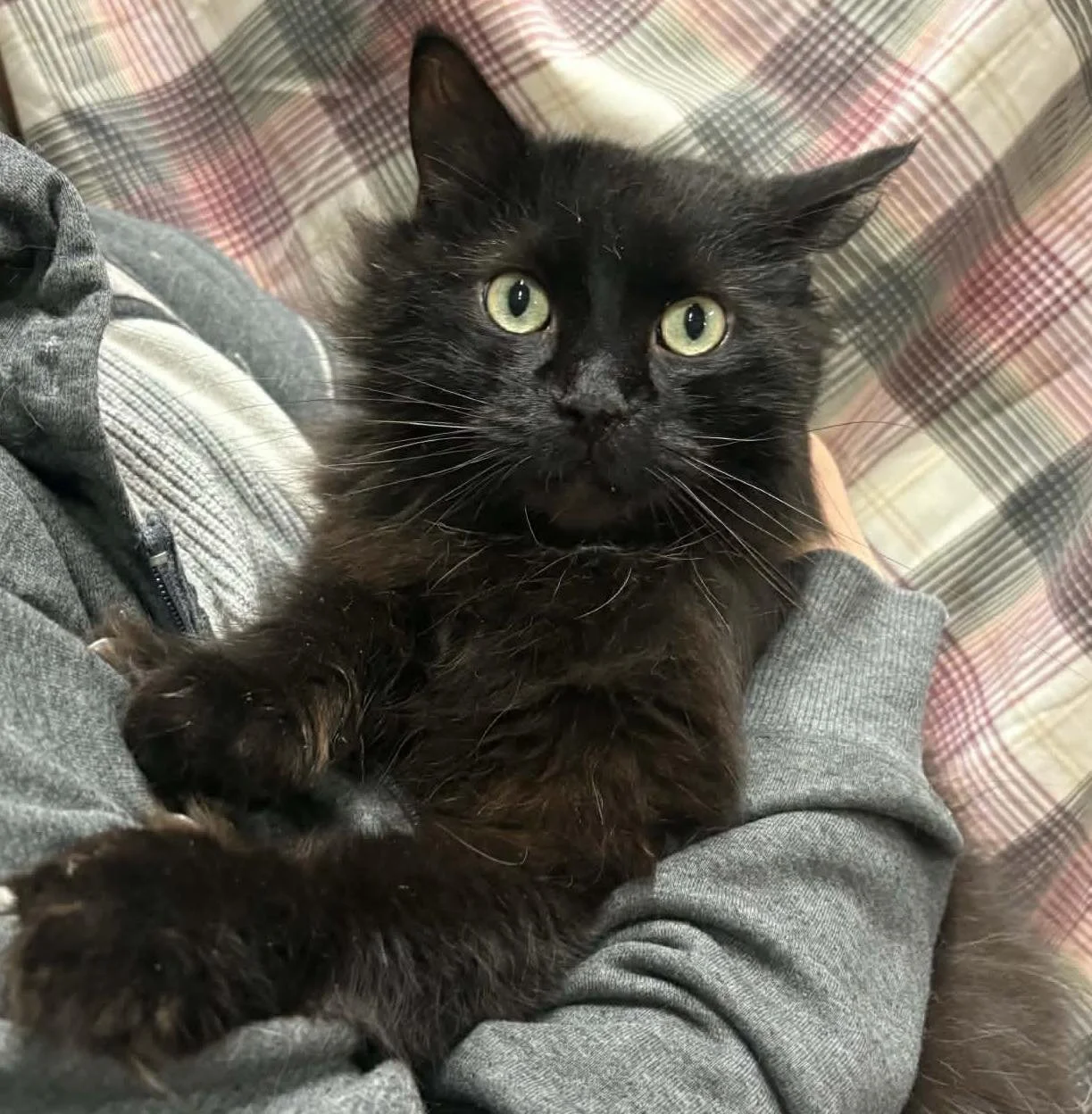

Bringing home a new kitty is such an exciting moment, and setting things up thoughtfully can make it a really positive experience for both of you. Start by creating a cozy safe space in a quiet room with a door that can close, like a spare bedroom or even a bathroom. This gives your cat a calm, secure place to settle in without feeling overwhelmed. Set the room up with everything they need—litter box, fresh food and water, and a comfortable place to rest—so they can easily find their essentials while they adjust. Keep in mind the 3-3-3 rule: it can take a cat three days to get used to a new environment, three weeks to become comfortable in it, and three months before it starts to feel like home.
As your cat begins to acclimate, spend some gentle, relaxed time together in their space. Some cats will explore right away, while others may take a little longer, and that’s perfectly okay. Sitting nearby, speaking softly, or offering a treat helps them get used to you and builds trust. You’ll know your kitty is ready to take the next step when they start showing curiosity about what’s beyond the room—often by scratching at the door or eagerly greeting you when you come in. That’s your cue to begin introducing them to the rest of your home, opening the door to a new, exciting chapter filled with exploration, comfort, and the start of a wonderful life together.
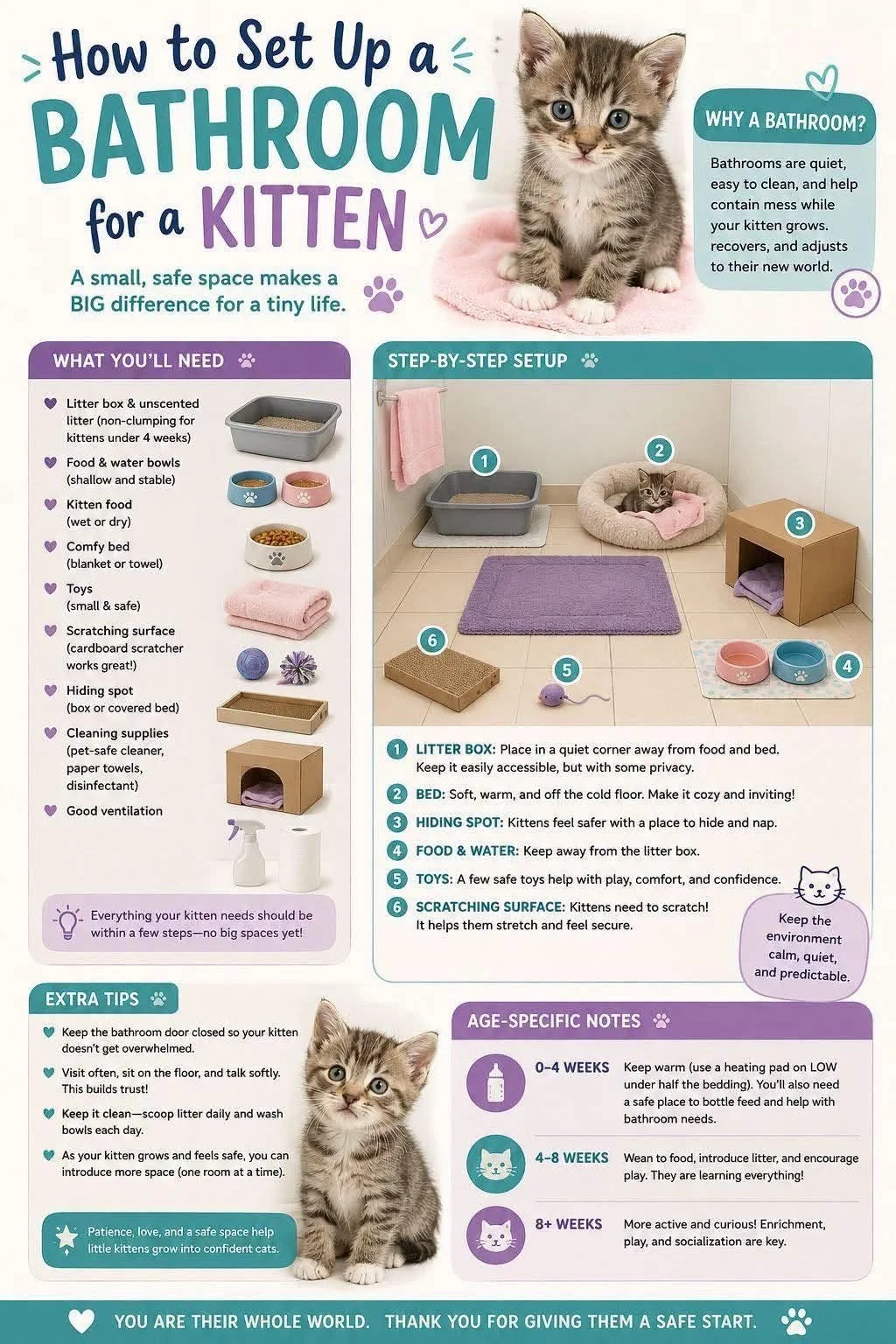
Thanks to House of Misfits for this infographic!
Introducing Two Cats

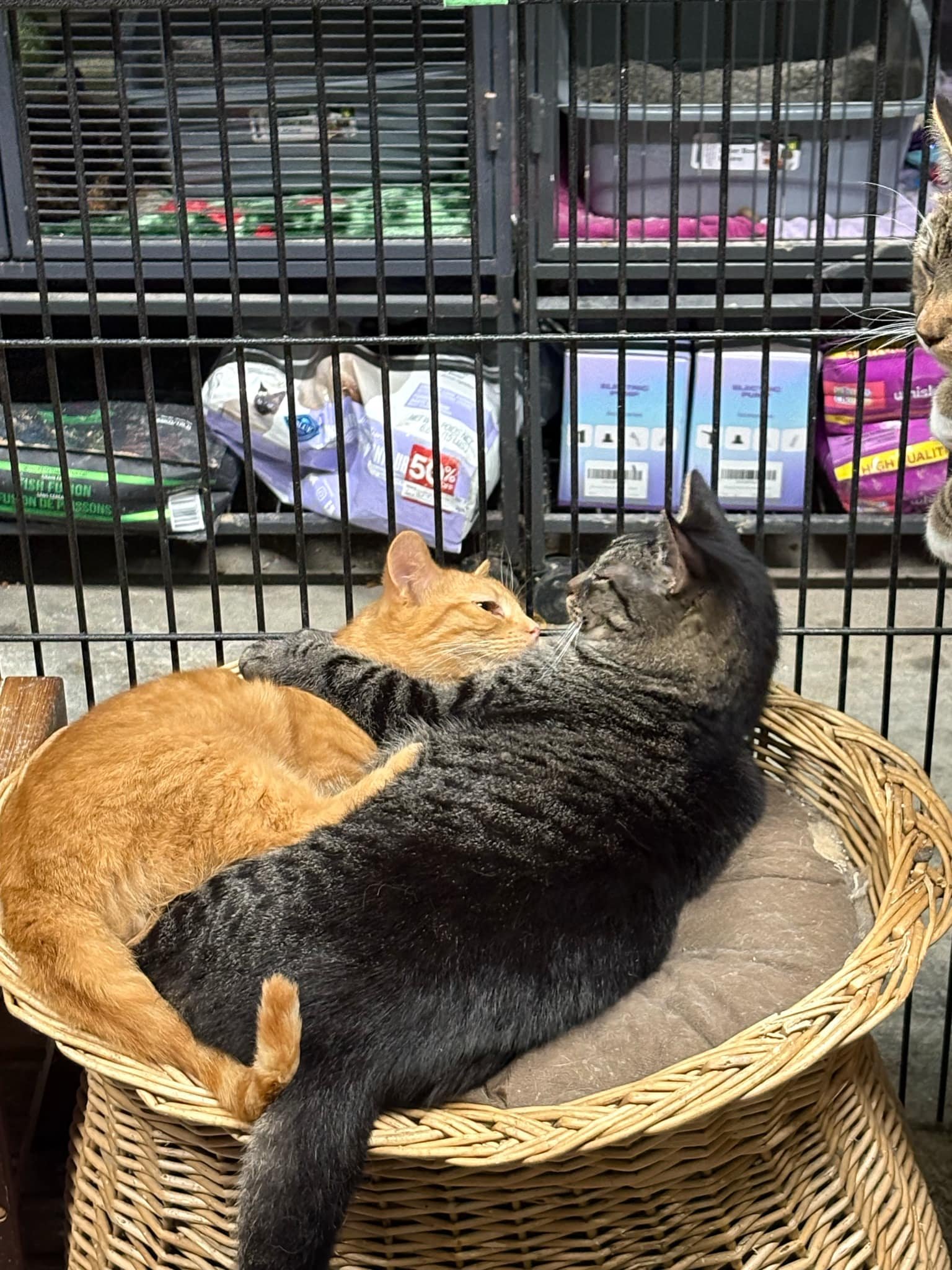
Introducing two cats can be a positive and rewarding experience when you take it slowly. Here’s a proven approach to help things go smoothly:
Start with a safe space: Set up your new kitty in a quiet room with a door that can close, including food, water, a litter box, and a cozy resting spot. Keeping the new cat out of sight at first is important—not only does it help the newcomer feel secure, but it also prevents the resident cat from feeling threatened, giving both cats a chance to settle in calmly.
Scent swap first: Exchange bedding, toys, or use a cloth to transfer each cat’s scent to the other. This allows them to get familiar with one another in a calm, low-pressure way, so the resident cat can slowly accept the newcomer’s presence without any direct confrontation.
Build positive associations (no visual contact yet):
Feed the cats on opposite sides of a closed door
Play with each cat separately on either side of the door
Offer high-value treats to both cats during these times
At this stage, the cats still do not see each other. The goal is to help them associate the presence and scent of the other cat with positive experiences like food, play, and rewards, without any face-to-face interaction.
Gradual visual introductions: Use a baby gate or slightly open door to let them see each other in short, calm sessions. Continue offering treats or interactive play to reinforce positive experiences.
Take it at their pace: Watch their body language carefully, keep sessions brief, and only increase interaction time as both cats show curiosity and calm behavior.
Go back a step if needed: If either cat shows stress or tension, return to the previous stage and try again later—this is completely normal and part of a healthy introduction.
By taking the time to do it right, you’re helping to create a peaceful relationship between your cats and building the foundation for their beautiful bond to blossom over time.
Please see a helpful how-to video here: How to Introduce Cats
Here are some helpful products which aid in the transition:
Feliway pheromone diffusers: These plug-in diffusers release synthetic “calming messages” that help reduce stress and tension between cats. They can make both the resident and new cat feel more secure in the environment and are often recommended during introductions to lower conflict and create a calmer atmosphere.
Treats / high-value rewards: Small treats used consistently during sightings or door-feeding sessions help reinforce the idea that “the other cat = good things happen.”
Baby gates or pet barriers: A sturdy baby gate is one of the most effective tools for the visual introduction stage. It allows the cats to see and smell each other safely while still preventing full physical contact, so interactions stay controlled and positive.
Cat shelves and cat trees: Cats prefer to use a lot of vertical space. By “catifying” your home, you are providing additional lanes for “cat traffic” so the cats can be in the same rooms without having to interact, if they’re not in the mood to do so. This reduces conflict in multi-cat households.


What is a Microchip?
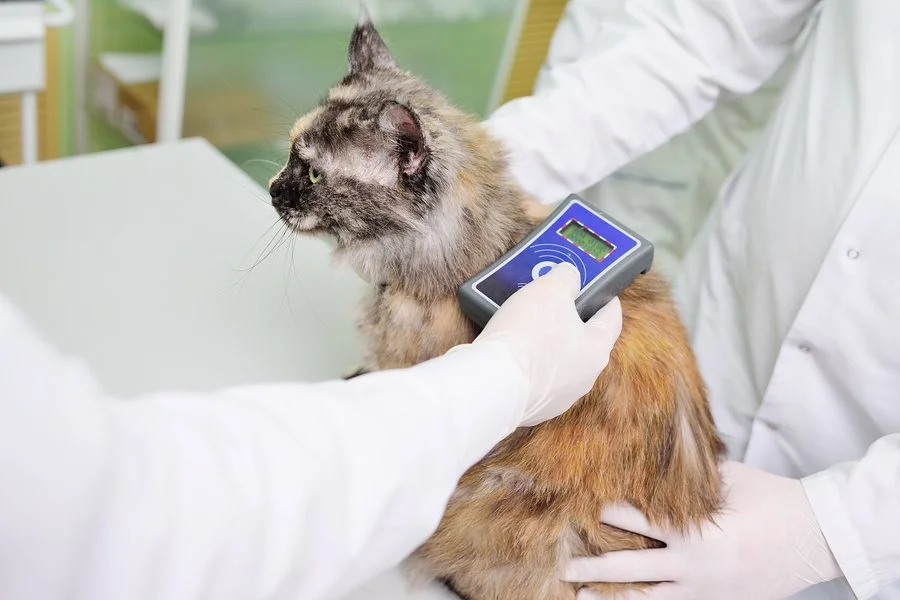
A microchip is a small chip (about half the size of a grain of rice) that, when scanned by a specialized device, will bring up a 15-digit number unique to your cat. Microchips are implanted in between the shoulder blades of the cat. However, over time, they can migrate under the skin, so sometimes the entire upper half (or even the whole body!) of the cat needs to be scanned to locate the chip. All of our cats and kittens are microchipped before being adopted.
What are the benefits of a microchip?
Microchips are permanent forms of identification. Microchips can be read years, even decades, after implantation. When the chip is scanned, the number is matched in the database to determine the owner’s contact information so the pet can be returned. Permanent identification substantially increases the likelihood that your pet will be returned to you if they become lost. As long as you keep your contact information up to date in the microchip database, an agency will be able to contact you if your pet is found. Rags to Riches Cat Rescue registers your cat/kitten in the database and 24PetWatch/PetPlace will email you a few days after adoption with additional information. Vet clinics, animal shelters, and rescues have scanners capable of reading microchips. Nowadays, you can even order a microchip scanner online.
My cat is lost! Can you track it with a microchip?
Great question, and one that we are asked often! Unfortunately microchips are not GPS units, so we cannot locate your cat using GPS or satellites. We wish we could! What a microchip WILL do is allow us to find your contact information through the registry’s database. Please consider putting Rags to Riches Cat Rescue as one of your emergency contacts on PetPlace. This will help in case you forget to update your contact information, or if you are away and your cat is lost.
What is FIV?